Lenflex Hose-Professional Hydraulic Hose Fittings Manufacturer Since 2003.
Language
In hydraulic systems the performance and safety depend on the reliability of all of the connections. A single weak hose assembly may cause leakage, unavailability or severe equipment damage. A hose crimping machine is necessary here. It is created to permanently connect hydraulic hoses to fittings to have a secure and pressure-resistant connection.
This guide will discuss how such machines operate, how to select the appropriate one and why it is essential to maintain them correctly to ensure a high level of operational efficiency during the entire operation period. Read on to learn more.
A hose crimping machine is a specialized machine that is used to compress a fitting on a hydraulic hose with controlled force. The crimped body fixes the hose and fitting joint together, forming a closed-joint that has a high pressure and vibration resistance capability. A hydraulic hose crimping machine is recommended in the workplace setting, as the crimping machine provides high-quality crimp consistency at high production volumes.
These machines are commonly utilized in construction, mining, agriculture and manufacturing or equipment maintenance plants. A well crimped hose assembly enhances safety, increases life and decreases the unplanned system failures.
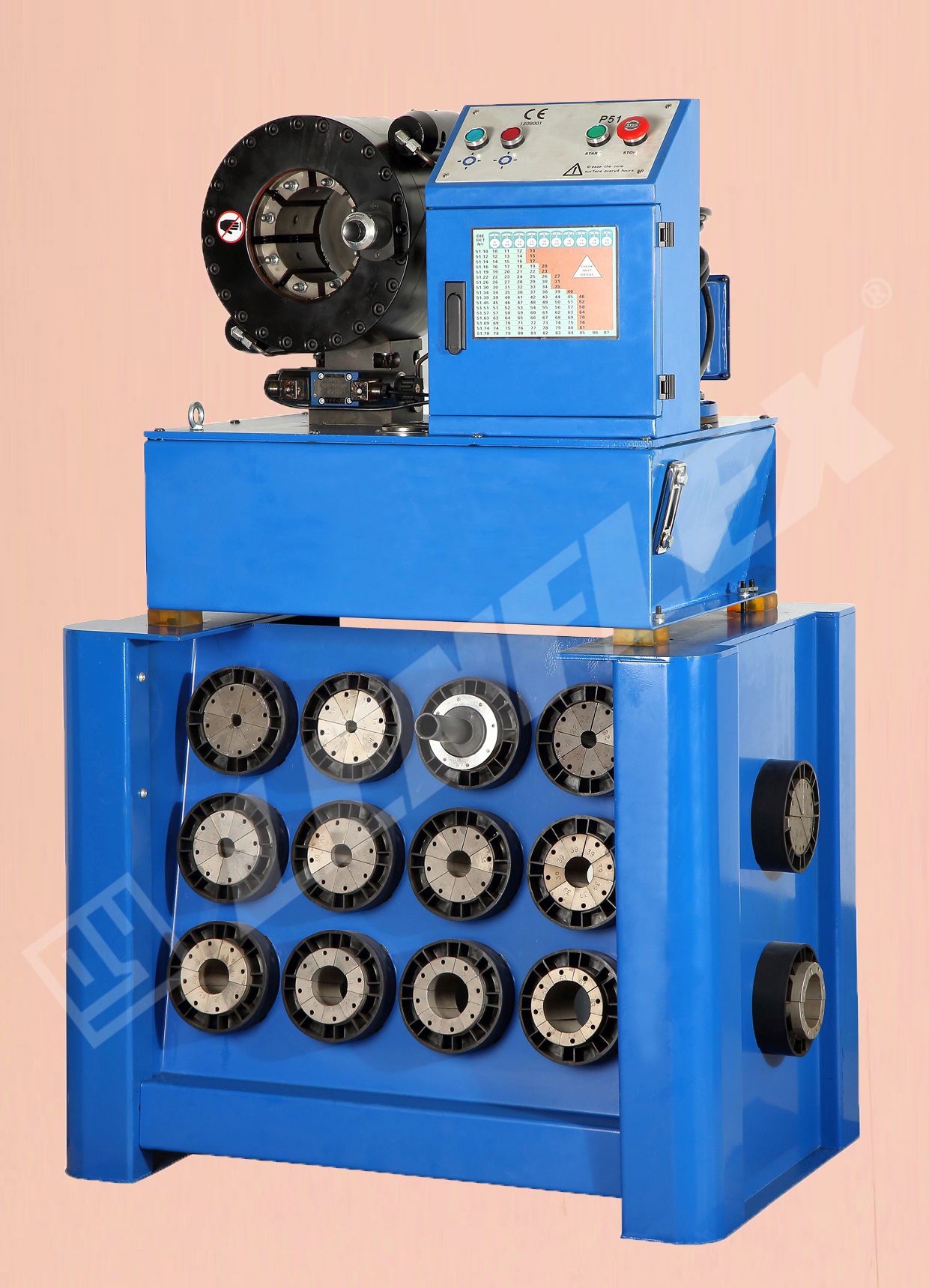
Understanding the working principles helps operators achieve consistent results and avoid costly mistakes. The process relies on controlled hydraulic force and precise die movement to achieve the correct crimp diameter.
The hose is cut cleanly using a proper hose cutter. An uneven cut can affect fitting insertion and lead to weak crimps. The fitting is then inserted to the correct depth, based on manufacturer specifications. To prevent under-insertion many technicians trace the line of insertion prior to assembly.
Hydraulic pressure is then applied after the hose has been fixed and fitted within the crimping head. Hydraulic oil drives the piston, forcing the dies inward with controlled and even compression. This controlled pressure is a major advantage over manual crimping because it improves repeatability and reduces uneven crimps.
The die set closes around the fitting shell and compresses it into the hose outer layer. This step creates the mechanical lock between the fitting and hose reinforcement. Incorrect die size or worn dies can lead to:
● over-crimping (damaging reinforcement)
● under-crimping (weak grip)
● uneven crimping (seal failure)
Modern machines will cease when the desired crimp diameter is achieved, either by mechanical control or by digital control. Finally, a caliper or crimp gauge should be used to check the final diameter to size it to specification.
Machine designs are different in various applications. The choice of the type of selection is based on workload, precision requirements and the environment.
Manual crimpers consist of mechanical force or hand-pump. They can be used in assembly jobs of low volume and simple repairs. These are relatively small, low priced machines that demand more effort on the operator and may not provide the accuracy of hydraulic machines. They are smaller in size and should be used on a small hose and occasionally in the field.
A hydraulic hose crimping machine will be the most popular type of machine in workshops and service centers. It offers high strength, consistent crimping force and repeatability which is why it is suitable in day-to-day activities. These machines are also ideal with steel braided and spiral-shaped hoses of hydraulics in which crimp accuracy is important.
CNC and automatic machines are designed for high-volume production. They store crimp specifications digitally, reduce manual adjustment, and help prevent operator errors. A CNC-based pipe crimping machine is ideal for manufacturers and distributors producing hose assemblies at scale.
Portable units are compact and designed for on-site maintenance work, especially where downtime must be minimized. Workshop machines are larger, more stable, and built for continuous operation with higher crimping capacity.
In general:
● Portable machines support quick field repairs
● Workshop machines deliver better productivity and precision
A structured crimping process ensures safety and performance. Skipping steps often leads to premature hose failure.
Always confirm the hose type, size, pressure rating, and fitting series match. Braided and spiral hoses often require different fitting designs. Inspect the hose end for wire damage or deformation before assembly.
Select dies based on the manufacturer’s crimp chart. The wrong die can form a crimp which is attractive at face value and collapses under the stress. It should also be ensured that the dies are in good condition and not battered because poor dies may lead to uneven compression.
Set the correct crimp diameter or machine setting according to specifications. Place the hose into the fitting until it is all inserted and then maintain the assembly straight when crimping. Run the machine in a continuous manner and not to put it off in-between cycles thereby causing any discontinuity in compression.
Crimp the wire and then measure the crimp diameter with a caliper or crimp gauge. Check the cracks, uneven crimps or broken fitting shells also. For critical systems, pressure testing is recommended to confirm sealing performance.
Selection of appropriate automatic hose crimping machine is a long term investment. The right machine is that which fits your needs in the hose range, workload and accuracy.
Key factors to evaluate include:
● Maximum and minimum hose size capacity
● Crimp force and pressure control stability
● Compatibility with SAE/DIN hose and fitting standards
● Die availability, die change speed, and calibration ease
● Safety features such as emergency stop and overload protection
● Power requirements (workshop voltage and operating environment)
When you are dealing with regular assembly jobs through your business, a stable hydraulic hose crimping machine would likely be the most useful tool in guaranteeing your daily output.
Frequent maintenance ensures the quality of crimps is an ongoing process as well as the life cycle of the machine. Crimps are usually inaccurate when neglected.
Best practices include:
● Inspecting dies for wear or damage
● Maintaining clean hydraulic oil and in correct quantities
● Oiling moving parts on a regular basis
● Testing calibration settings regularly
● Removal of debris on the crimping head
Planned maintenance will guarantee the machine produces the same quality crimp on thousands of cycles.
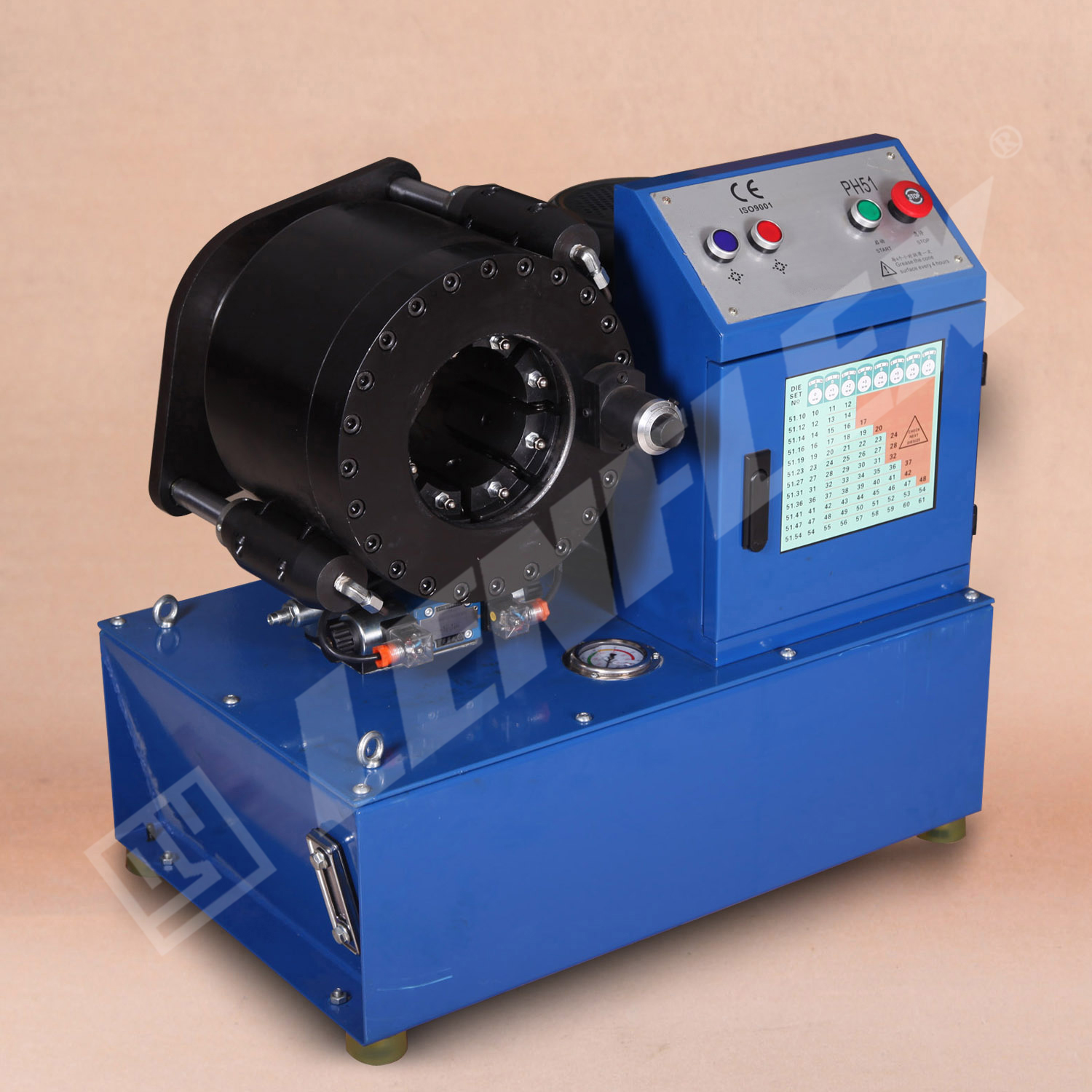
Machines that are well maintained can still have problems. Early diagnosis avert wastage of time.
● Hose Leakage After Crimping: Leakage usually results from incorrect crimp diameter or poor hose insertion. Recheck specifications and assembly depth.
● Over-Crimping and Under-Crimping Issues: Over-crimping damages reinforcement layers. Under-crimping leads to loose fittings. Accurate calibration is essential.
● Uneven Crimping and Die Misalignment Problems: Uneven crimps indicate worn dies or misalignment. Replace damaged dies and realign the crimping head.
● Machine Pressure and Hydraulic Oil Problems: Inconsistent pressure often points to contaminated oil or internal leaks. Regular oil inspection prevents this issue.
In hydraulic systems, a hose assembly will be as good as the crimp holding it together. Even high-quality hoses and fittings can be faulty when the crimp is wrong, misaligned or not in accordance with the appropriate standards. This is the reason why the right crimping machine selection and observance of the appropriate crimping practices have a direct influence on safety, uptime and long-term performance.
Companies that prefer regular performance without the need to spend a lot of money on trial-and-error, collaboration with a reliable supplier can simplify the process significantly. Lenflex Hose has a full range of hydraulic solutions hydraulic hoses, hydraulic fittings, hydraulic ferrules, and hydraulic hose crimping machines are used in severe industrial working environments. Our manufacturing power and quality oriented strategy make us a trusted option among the contractors, distributors and equipment owners across the globe.
In case you are ready to reduce hose breakages and maximize assembly time, contact us and get the best solution to your hose size, fitting standard and pressure requirements.
Question 1. How can I identify whether a crimp is under-crimped or over-crimped?
Answer: Measures the diameter of crimp and compares it with manufacturing specifications. The visual evidence consists of loose fittings or broken shells.
Question 2. What are the most common reasons a hydraulic hose fails after crimping?
Answer: The most common causes include incorrect hose fitting combinations, improper choice of dies as well as improper crimp calibration.
Question 3. How often should a hydraulic hose crimping machine be calibrated?
Answer: It is worth noting that the calibration ought to be tested periodically especially when it is used extensively during die change or when the quality of the crimp varies significantly.

ONE-STOP SOLUTION OF HYDRAULIC COMPONENTS.

