Lenflex Hose-Professional Hydraulic Hose Fittings Manufacturer Since 2003.
Language
In industrial applications, hydraulic hoses are like arteries supplying fluid between machine parts with vital pressure. The power-transmitting fluids exert pressure on these from the inside. The way they are manufactured directly impacts how they hold up to pressure and remain structurally sound. Engineers have to pick a specific type of hydraulic hose based on their applications. For high-pressure applications, it can be the choice between a 2-wire and a 4-wire hydraulic hose. They provide enough flexibility for ease of routing between parts. These hydraulic hoses can handle external force application, twisting of the hose, and even vacuum conditions. To understand why there are wires inside a hydraulic hose, we need to understand how they are built using layers.
● Fluid Compatible Inner Layer
● Structural Reinforcement Layer with Wires
● Protective Outer Cover
This article will revolve around the middle layer, where the structural reinforcement is done using wires. It will help readers see if their applications require a 2 wire or 4 wire hydraulic hose.
We are addressing the middle layer that provides these hydraulic hoses the strength to handle intense pressures. They even help prevent catastrophic bursting under heavy loads. You cannot tell the difference between the two hydraulic hoses just by looking at them from the outside. The internal designs are different and dependent on the steel wire layout. The method and amount of steel wire dictate the hose's performance. Modern hose selection is guided by the reference called the “STAMPED” acronym. To build an operative machine, we need to ensure that we consider the right Size, Temperature, Application, Material, Pressure, Ends, and Delivery.
The strength of the 2-wire hose comes from the two layers of steel wire that are woven together in an overlapping pattern similar to baskets. It's called high-tensile steel wire braided in a crisscross pattern. The wraps around the inner tube. The braiding method allows the hose to balance between maneuverability and pressure retention capability.
The center of the hose is made with artificial rubber blends. It's usually Nitrile (NBR) or Chlorinated Polyethylene (CPE). It keeps it flexible and prevents it from being degraded when passing oil. To prevent the two wires from scraping against each other, manufacturers use a layer called “dough”. It protects the two wires from rubbing against each other and failing.
A major advantage of using these hydraulic hoses is that you don't need to shave off the outer rubber to attach a metal end connector. These non-skive designs allow attachments of fittings without removing the outer cover. It makes assembling hoses faster, which can be vital in the manufacturing process.
The 2-wire hydraulic hose is built to handle everyday medium-pressure applications. They can handle 2,000 to 6,000 pounds per square inch of pressure. However, it depends on the diameter of the hose. They are also highly reliable when it comes to handling temperature. They can function perfectly in freezing -40°F to flaming hot +212°F.
The braided design allows the hose to bend much more sharply than spiral-reinforced counterparts. The flexibility is ideal for routing in tight spaces within machines. The woven structure is ideal for the absorption of vibration. The crisscrossed wires can shift the energy completely in all directions.
It is important to note that the physical limits of these hoses drop as the internal diameter increases. For example, a 1/4" hose can safely handle 5,000 PSI, but a wider 2” hose with the same reinforcement will support 1,125 PSI.
Unlike the Crisscross Weave of the 2-wire hydraulic hose, the 4-wire hose uses exactly 4 layers of strong steel wire in the form of spiral wrap. These surround the inner tube. Instead of weaving separate wire layers, they are wound in alternating directions like a helical pattern. The method gives unmatched structure strength and prevents the folding or bending of the hose.
The wires are coiled side-by-side rather than interwoven. They stay parallel, eliminating the rubbing and precision points that occur in woven designs. The end result is a much thicker and tighter structure. In construction, these coiled wires are stacked evenly on top of each other to form a rigid wall-like structure. The wall prevents the hose from expanding and contracting, much like breathing, when the system experiences surges of fluid.
The 4-wire hoses are built specifically to handle the toughest jobs where the internal forces can reach up to 6,000 to 8,000 PSI. These are pressures during normal operation, and in case of transient momentary spikes can go higher. They are ideal for applications where high-impulse pressure is expected. A 2 wire hose will stretch out and break apart in such scenarios.
Because they operate in such a high-pressure environment, the outer rubber needs to meet the requirements of standards like MSHA (Mine Safety and Health Administration). It guarantees that the hose will not catch fire and withstand severe continuous abrasion caused by rocks. In general, the coiled structure has a significantly tougher design to handle physical hits and rubbing against sharp objects.
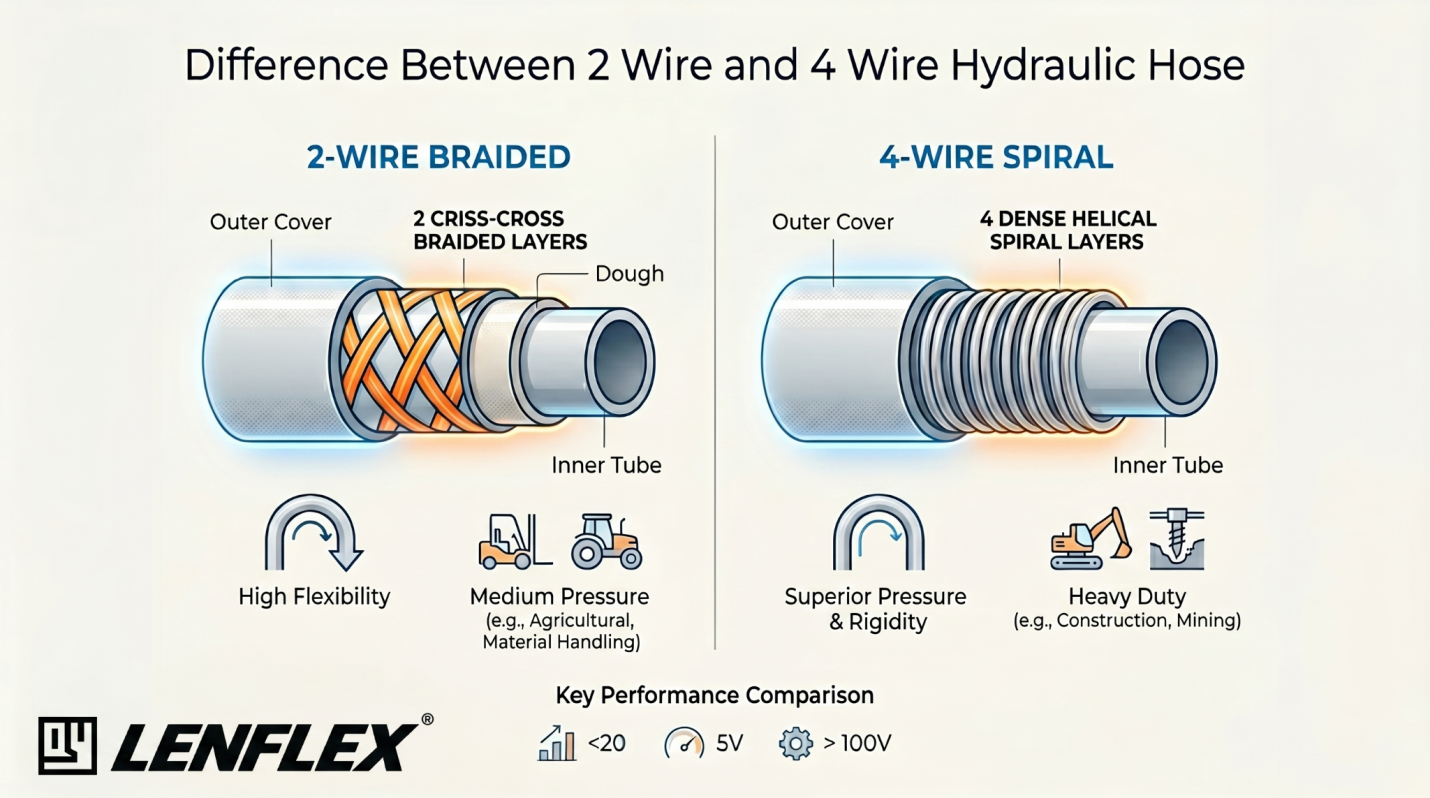
Comparing 2-wire and 4-wire hoses in terms of their ability to bend is vital. The 2-wire woven hoses are highly flexible. They are ideal for dynamic spaces where you need to route hoses through complex routes. In comparison, 4-wire hoses are stiff and inherently rigid by design. If you try to force a 4-wire hose to make a tight curve, it can lead to breakage of the inner layers.
Because the 2-wire hydraulic hoses are suitable for sharp turns, you can use a shorter length in the machine parts connections. In comparison, 4-wire hoses are heavier as they contain a higher volume of steel. It can impact the gas mileage of vehicles.
Note: There is a special compact version of 2-wire hoses specifically referenced as EN 857 2SC. It offers half the bending radius of a regular 2-wire hose.
When it comes to containing the pressure, the 4 wire hose design is ideal. A 2-wire design cannot reach its potential. The massive difference is mainly in how long the two hoses last under repeated impulse pressure. The two wire hydraulic hose is tested to survive 200,000 repetitive pressure cycles. In comparison, the 4-wire hose can handle 400,000 to 1,000,000 surges, depending on the design. The massive lifespan is mainly due to the steel layers.
● Agricultural Machines
● Material Handling
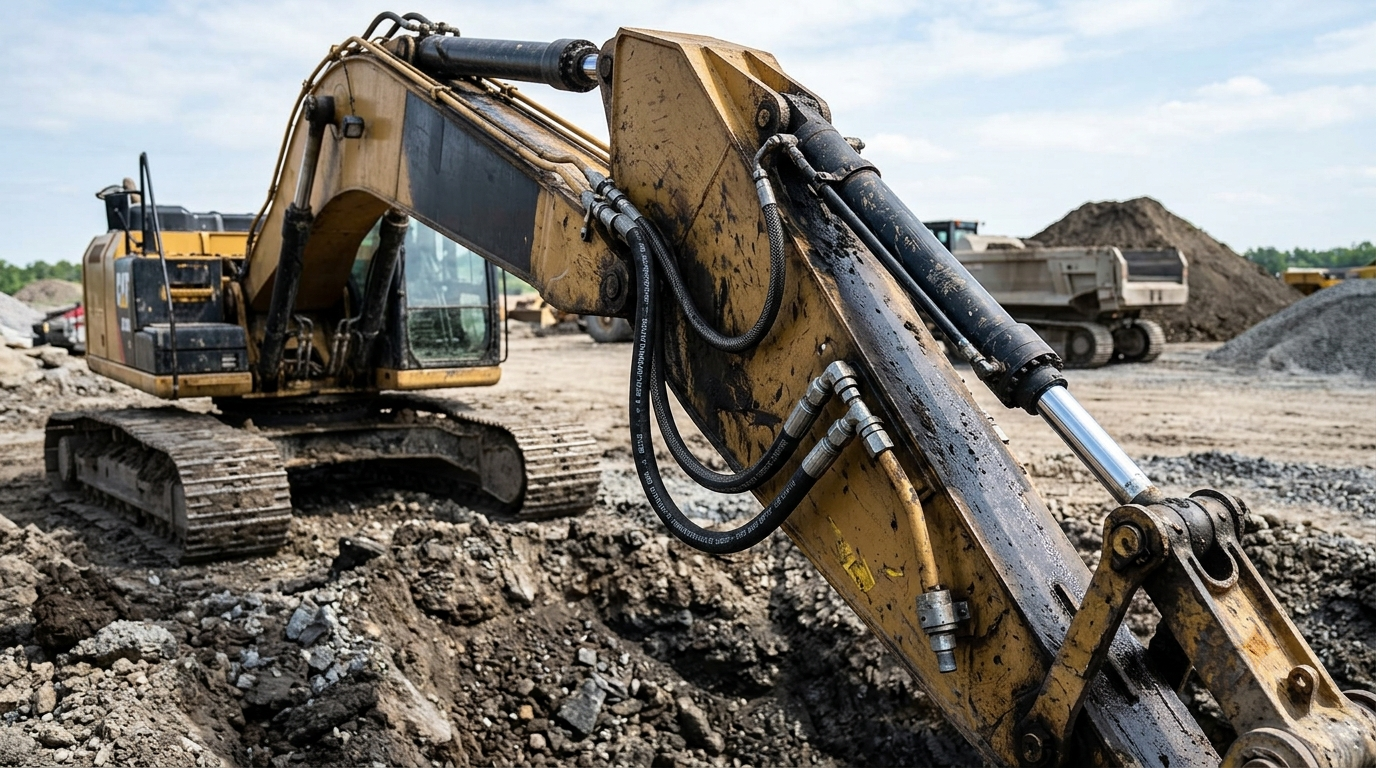
● Construction
● Industrial Maintenance
● Pressure Washers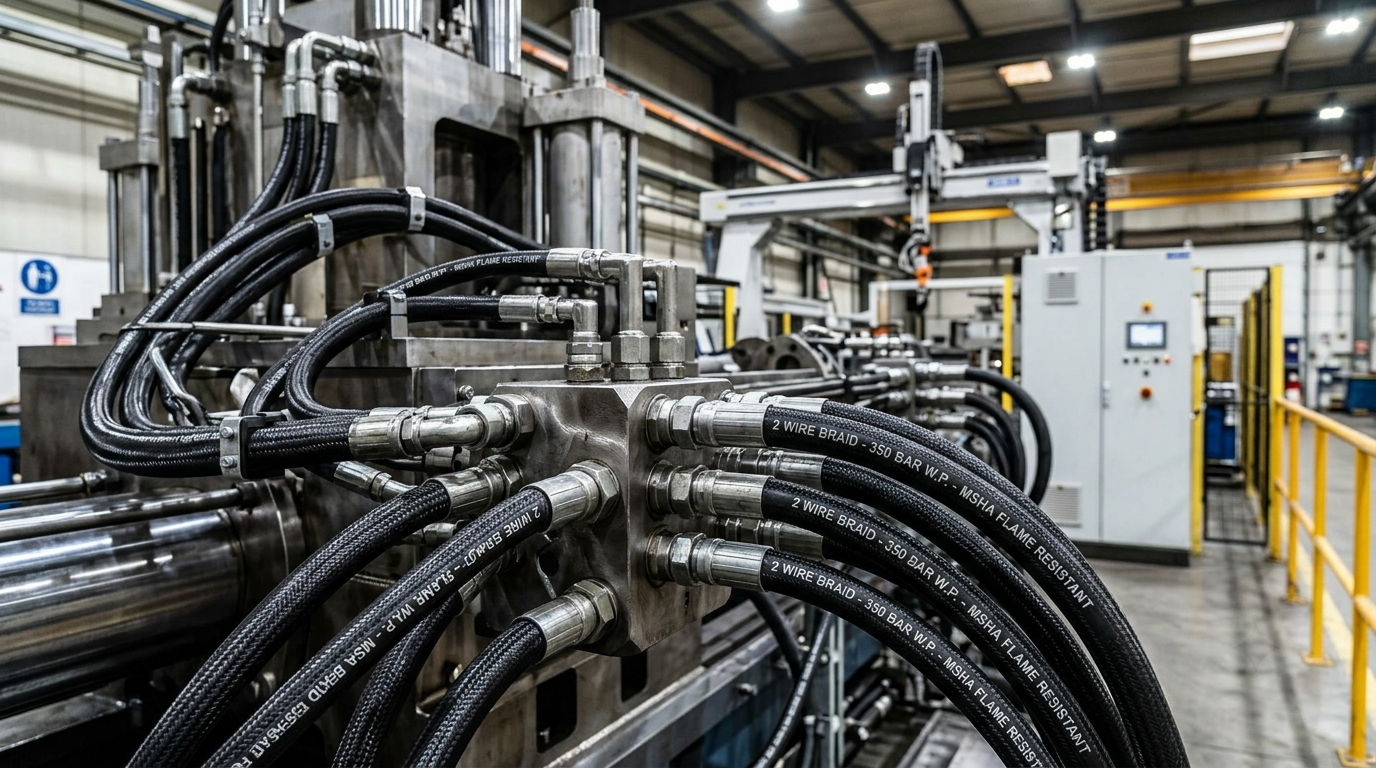
● Earth-Moving
● Mining
● Oil & Gas
● Heavy Manufacturing
● Subsea Operations
Choosing the right hose requires following the tried and tested industry checklist technique. STAMPED means analyzing the following aspects:
● Size
● Temperature
● Application
● Material
● Pressure
● Ends
● Delivery
The approach ensures that all required areas for the selection of hoses are properly considered in the selection process.
● Handling Pressure and Space: The easiest method is to ensure that the hose rating to handle working pressure is equal to or higher than the machine's absolute maximum power limit. In case of high-frequency pressure shocks, go for the 4-wire hose.
● Routing and Flexibility: You must evaluate how the hose will pass through the space constraints in your machine. Go for a 2-wire hydraulic hose for compactness and tight turns.
● Analysing Cost: While a two wire hydraulic hose may seem cheaper in the start but, they may break down if one selects properly. The frequent breakdowns can be more expensive than buying a 4-wire solution.
● Safety Limits: Hoses are engineered with a massive buffer of 4:1. This means a safety factor of 4. However, never run your machine on the safety limits, as it is the breaking point of the hose.
● Lifespan: Rubber is prone to breaking down with time. If a hose looks pristine from the outside, it may be damaged from the inside. Considered for replacement every 5 to 7 years.
● Storage: Before installation, make sure your spare hoses are stored in a 50-70°F maintained warehouse. Otherwise, too hot or too cold conditions can cause the material to become brittle.
In the end, deciding between a 2-wire and a 4-wire hydraulic hose depends on the application. The engineers need to carefully analyze the working conditions to decide the best option. Preferably, use a rig to analyze the system's maximum and normal working pressure, then find the compatible hydraulic hose. Also, analyze the machine routing needs that mandate flexibility. To put it simply, follow these rules:
● 2-Wire Rule: Use them for general machinery. They are superior for bendability.
● 4-Wire Rule: For toughness and jobs that require handling impulse pressure, go for a 4 wire hose.
In case you need professional advice and equipment with high reliability, consider the Lenflex Hose, our specific models include the Lenflex SAE 100R2ATS/EN853 2SN, their 2-wire woven version, and the Lenflex EN856 4SP/4SH, their 4-wire coiled version. Both of these products are in line with internal standards to ensure your business-associated equipment runs flawlessly. Contact us for more information.
The middle layer is the main differentiating factor. In 2-wire hoses, a braided interwoven steel wire structure is used to allow maximum flexibility. In comparison, the 4-wire hoses have spiral steel coils stacked over each other to handle extreme pressure spikes.
2-wire braided hoses are not recommended for heavy-duty machinery. They cannot handle the large impulse pressure that these machines can create. Constant replacements and stoppage of equipment can be more costly than purchasing a 4-wire hydraulic hose.
The replacement of hydraulic hoses is essential. The rubber is naturally prone to degradation with time. It can start to crack or disintegrate from the inside. Replacing them every 5 to 7 years is the ideal strategy to keep the system running healthy.

ONE-STOP SOLUTION OF HYDRAULIC COMPONENTS.

