Lenflex Hose-Professional Hydraulic Hose Fittings Manufacturer Since 2003.
Language
ose assemblies in hydraulic systems are only as reliable as the components that bind them together. Although the most attention is usually given to the use of hoses and fittings, ferrules equally are an important aspect. Hydraulic hose ferrules are made to fix the hose to the fitting during crimping, provide pressure containment, leak prevention and durability.
This article describes the nature of hydraulic hose ferrules and their operation. It also discusses skive vs. non-skive design and gives a suggestion on how to select and install it properly. Read on to learn more.
The ferrules of hydraulic hose are metal sleeves that are crimped around the hose and installed on the hose. They squeeze the hose reinforcement over the fitting stem forming a powerful mechanical lock. Even excellent hoses and fittings may burst in the case of absence of a properly matched ferrule.
With professional hose assemblies, hydraulic pipe ferrule fittings are designed to fit a certain hose construction and pressure rating. They do not play a cosmetic role that solely influences the performance of seals in terms of sealing, resistance to impulse and safety in hydraulic systems.
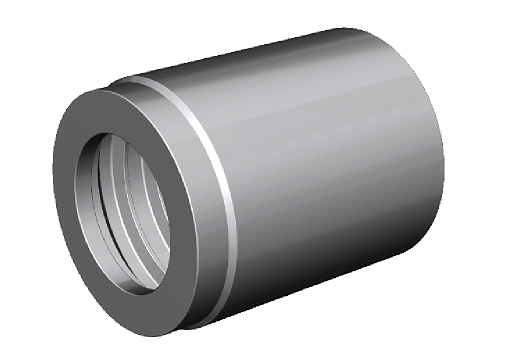
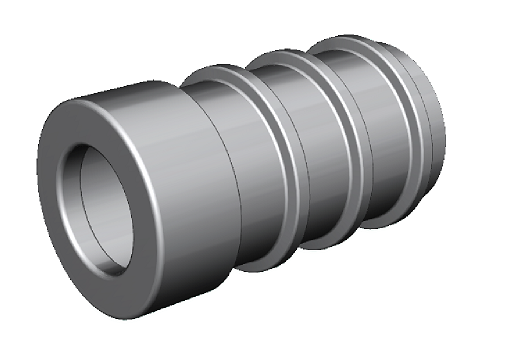
Ferrules may appear simple, but their design is highly technical and application-specific.
A ferrule is designed with precise wall thickness and internal geometry. Crimping occurs in that it clamps evenly round the hose pushing the reinforcement layers to cling to the fitting stem. This controlled deformation is used to make sure that the hose does not slip even when it has been pressed in and out several times.
Appropriate hydraulic pipe ferrule fittings have the crimp force distributed evenly so that it does not cause a high concentration of stress, resulting in the destruction of reinforcement wires or the hose tube.
The hose ferrules of hydraulic hose are principally composed of carbon or stainless steel. The steel ferrules mostly used are carbon steel and are zinc plated to prevent corrosion or made of stainless steel and used in hostile environments.
Material selection affects:
● Corrosion resistance
● Crimp consistency
● Long-term durability
● Compatibility with hydraulic fluids
Skivious (skive) ferrules require the hose cover to be removed before assembly. This exposes the reinforcement, allowing the ferrule to crimp directly onto the steel wires. Skive ferrules can be applied in a high-pressure or spiral hose. Non-skive ferrules have a shape to crimp around the cover of the hose, and not to take it off.
They are easy to put together and save on preparation time, but they should be well matched to the type of hose.The selection of skive and non-skive hydraulic pipe ferrule fittings are dependent on the construction of the hose, pressure needs, and recommendations of the manufacturer.
Hydraulic hose ferrules are not interchangeable parts. They should be designed in accordance with hose construction, type of fitting and working pressure. The wrong ferrule can lead to leakage, poor grip of crimp or hose pull off when under impulse conditions.
The fittings shell is manufactured as one piece ferrules which produces a pre-matched assembly. This type of design enhances the consistency of crimps and minimizes assembly mistakes and that is why they are normally designed in the OEM and high-volume production settings.
Two-piece ferrules are made by taking a separate sleeve and fitting the stem of the ferrule. They offer more versatility in hose sizes and styles of fitting whereas they need to be accurately matched during assembly to ensure crimp integrity.
Interlock ferrules are developed to operate with high pressure and high impact. They fit mechanically into spiral hose reinforcement, which provide extra pull-off strength and better safety in extreme-duty hydraulic systems.
Braided hose ferrules are designed to be flexible and moderate pressure systems, and have lower crimp force requirements. Spiral hose ferrules are fatter and designed to resist greater crimp forces required in multi-layer reinforcement and thus they could be used in heavy-duty and high-stress applications.
Hydraulic hose ferrules find application in many industries and these include:
● Construction and earth moving equipment.
● Manufacturing systems, industrial machinery.
● Farm machinery and forest machinery.
● Hydraulic heavy-duty mining.
● Energy, gas and oil uses.
Hydraulic pipe ferrule fittings of each application has distinct requirements and thus proper selection is crucial to the safe operation.
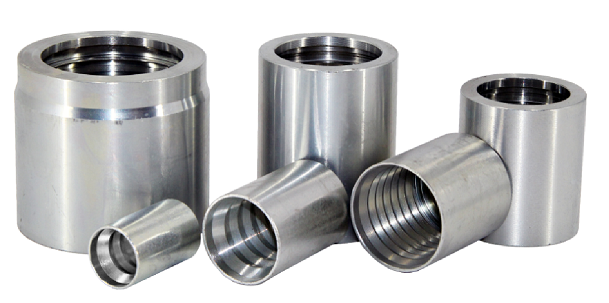
Selecting the right ferrule is not just about size. Multiple factors influence performance and safety. Key considerations include:
● Hose type and reinforcement structure
● Operating pressure and impulse frequency
● Compatibility with fittings and crimp specifications
● Environmental exposure such as corrosion or abrasion
● Manufacturer crimp charts and assembly guidelines
Using mismatched hydraulic pipe ferrule fittings can lead to leakage, fitting blow-off, or premature hose failure.
Proper installation ensures the ferrule performs as intended throughout the hose’s service life.
Inspect the hose for damage and cut it cleanly. For skive ferrules, remove the hose cover evenly without nicking reinforcement wires. Clean all components before assembly.
Always adhere to the given diameter of the crimp. Install crimping devices with calibration and make sure that you have the hose almost inserted before crimping. Avoid guessing based on appearance alone.
Crimp using crimping device, measure and examine crimp diameter and look at the cracks or unequal compression. Critical applications should be pressure tested to ensure that there is sealing integrity.
Hydraulic hose ferrules are often tiny parts, yet with a critical part to play in the safety and the working of the system. Choosing the right type of ferrule, pairing it to a suitable hose and connecting and installing it correctly, may help to avoid an expensive failure and down time. When it comes to companies that want to find a reliable solution to hose assembly, the experience of the manufacturer matters.
Lenflex Hose delivers a full line of hydraulic hoses, fittings, and ferrules designed to meet the needs of industries and assist customers to construct reliable hydraulic systems without doubt. Do you need the appropriate ferrule to your hose assembly? Explore our hydraulic products line and contact our technical department to give you application specific advice.
Question 1. When is skiving required for hydraulic pipe ferrule fittings?
Answer: Skiving is required when the ferrule is designed to crimp directly onto exposed reinforcement, usually in high-pressure or spiral hose applications.
Question 2. How do I avoid ferrule slipping or leakage after crimping?
Answer: Use compatible components, follow crimp specifications precisely, and verify crimp diameter through inspection and testing.

ONE-STOP SOLUTION OF HYDRAULIC COMPONENTS.

