Lenflex Hose-Professional Hydraulic Hose Fittings Manufacturer Since 2003.
Language
Lenflex Hose-Professional Hydraulic Hose Fittings Manufacturer Since 2003.
PTFE is the core material used in the production of hoses. It is a specialized synthetic polymer called Polytetrafluoroethylene. It is also widely known as Teflon. The invention of the material was a breakthrough in industrial fluid dynamics. It changes how we move liquids and gases through a system. The material offered superior chemical resistance, which unlocked a multitude of applications. It can also work in high heat and provide physical durability.
The main reason why most industries moved from using elastomers such as nitrile or EPDM was the following scenarios:
● Handling Harsh Chemicals
● Extreme Purity
● Operating in Extreme Heat
It gave engineers an open field to develop new systems that lower the number of design constraints. PTFE teflon hose became the versatile go-to option for flexural fatigue life. Owing to its exceptional chemical resistance and cleanliness, it is mostly used in Semiconductor Manufacturing and Petrochemical Processing.
This guide is meant to provide readers with an in-depth analysis of all the applications of PTFE teflon hose. It serves as a basic document for engineers to find if PTFE will prove useful in their next project.
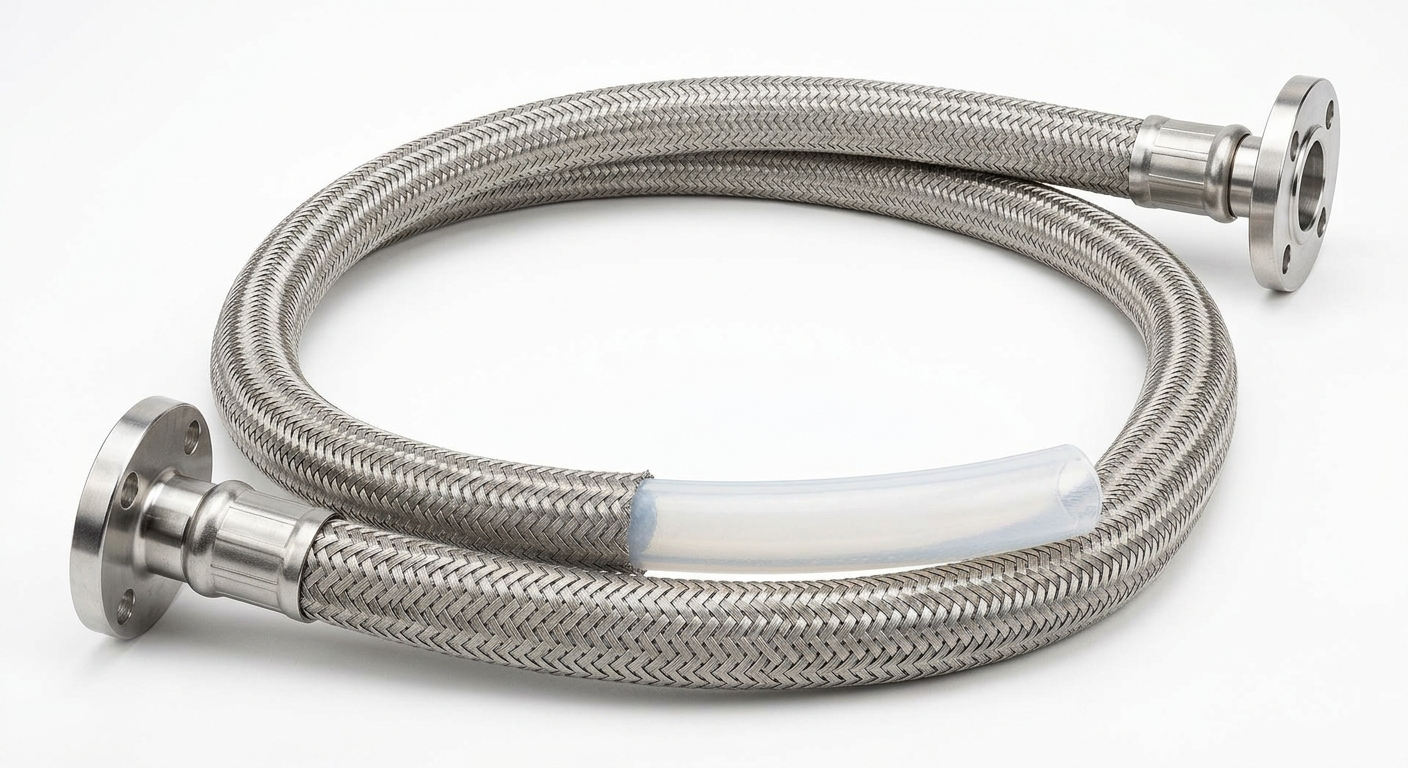
Owing to its internal structure, PTFE flexible hose is capable of handling most chemical and environmental stressors. Its very strong carbon and fluorine atoms keep the structure from splitting or breaking. It holds its strength even under most chemical reagents.
Unlike elastomeric, PTFE does not become brittle under freezing cold conditions. Neither does it lose its strength under high heat, like under steam. It is completely immune to UV radiation and ozone, meaning you will not see the surface deterioration or bloom found in rubber hoses that are left outside for long. Typically, they have an operating temperature of -94°F to +500°F. It also offers:
● Chemical Inertness: PTFE is chemically inert. It can handle concentrated sulfuric acid, hydrochloric acid and aggressive organic solvents like toluene.
● Shelf Life: It is unlimited shelf life. The material does not age or break with time like synthetic rubber compounds.
● Flexural Fatigue Life: It is exceptionally durable when it comes to flexural strength. The material can endure 1 million flex cycles as referenced in ASTM D2176. It is far above the alternatives like FEP and PFA.
The tight molecular structure and smooth surface allow PTFE teflon hose to provide extremely low friction. IT is easy to clean and does not let residues stick to the interior surface:
● Low Friction Coefficient: 0.05 to 0.10, which minimizes pressure drops.
● Sanitization: The non-porous nature allows Clean-In-Place (CIP) or high-heat steam Sterilization-In-Place (SIP) systems to work efficiently.
● Moisture resistance: The moisture absorption rate is less than 0.01%. The house will not swell or harbor mold, even in humid conditions.
● Purity: The material is non-toxic and odorless. It has no hazardous chemicals that may leach into the flowing fluid.
These are the physical shape of the hose's inner wall, which dictates how well the material handles flow and movement. Here is a table comparing both in detail:
| Performance Factor | Smooth Bore PTFE | Convoluted PTFE |
| Bend Radius | Wide / Rigid | Tight / Highly Flexible |
| Flow Efficiency | Optimized | Prone to turbulence |
| Cleanability | Excellent | Challenging (traps debris) |
| Working Pressure | Higher (thicker wall) | Moderate |
The capability of handling a wide variety of chemicals is one of the superior qualities of PTFE. There is no need for internal layers to protect the material as required in synthetic rubbers such as NBR and EPDM.
PTFE hoses meet rigorous safety standards, such as those set by the Chlorine Institute, for transferring dangerous substances like liquid or gaseous chlorine and bromine. For particular applications that require chlorine, these hoses use a specific pin-pricked CPE jacket. This allows any gas that seeps through the PTFE flexible hose wall to vent safely, preventing pressure buildup under the outer layer.
A convoluted PTFE hose is used for thick and sticky materials such as resins or adhesives. This design improves the fluid flow and reduces the back pressure during suctioning. The hoses’ resistance to repeated bending is high, ensuring longer service life in active moving systems, thus reducing the need for frequent replacement and limiting operational downtime.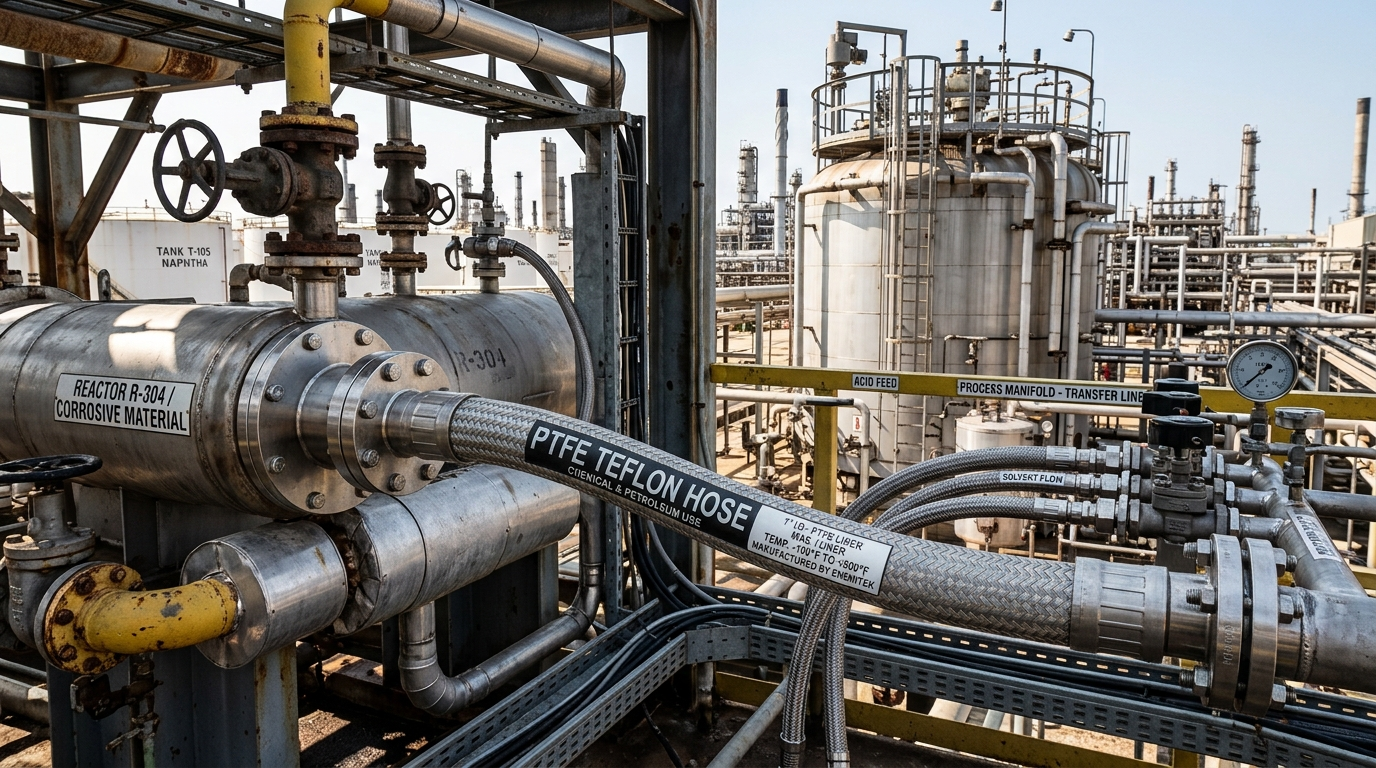
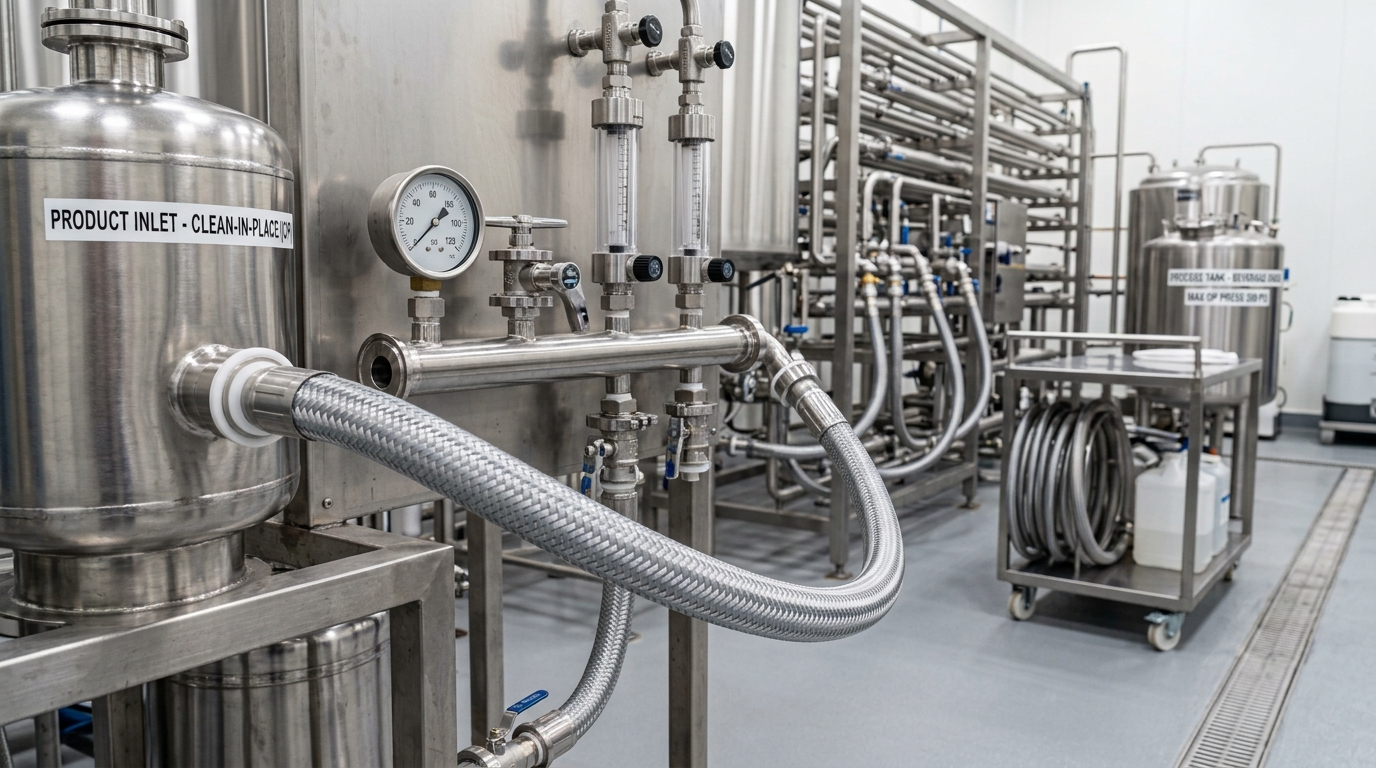
In the medical and biological industries, PTFE Teflon hose is valued for its cleanliness and high level of purity. It can handle sensitive and delicate material required to protect APIs. The key is to use raw, unprocessed PTFE, commonly known as virgin PTFE. The manufacturer needs to ensure that there are no additives or colors that may leach into the medicinal mixtures. While it is fixed into the system, it can handle multiple cycles of pressure. It can handle the steam sterilization requirement that would break down common rubber.
The most important thing is its capability to handle biological ingredients. The inner layer should not hinder the live cell cultures and proteins in processing. Any disturbance can lead to the lowering of potency. The interior also needs to be manufactured with a smooth bore architecture. Any presence of microscopic particles can cause the bacterial colonies to start growing. These internal crevices provide bacteria with space for growth.
Finally, the external of the PTFE should be easy to clean. Using a high-grade heat-resistant silicone casing is ideal over a stainless steel braid.
In food application the key is to maintain the taste and smell. Using PTFE ensures that we are using a chemically inert material that does not hinder food. These ensure that the flavor, aroma and color of the products like dairy and juice remain unaffected. The natural “non-stick” surface ensures that the food does not adhere to the surface.
The PTFE flexible hoses are free from plasticizers or phthalate-free. They can be tracked by the batch meeting strict protocols. For systems that need to drain completely on their own hoses with a spiral shape, internal structures, called helical convoluted designs, are preferred. They prevent the fluid from getting stuck and spoiled between productions.
In automotive applications, the hose must perform in harsh conditions. The environment may contain high vibration, high heat and significant internal pressure. PTFE is mostly utilized in the fuel lines or the braking system. It can handle the modern biofuels like ethanol and biodiesel without disintegrating itself. These hoes also supply to the turbocharge where excessive heat is generated. A typical hydraulic hose will fail in such extreme heat conditions.
Particularly in the aerospace industry, lightweight material is preferred. It helps improve the overall fuel efficiency of aircraft. They are used in pneumatic systems and hydraulic systems that should remain reliable at extreme altitudes. These are used as protection for cables and door surfaces. PTFE teflon hoses have a low dielectric constant and offer good resistance to fire. They can also handle extreme cold. They are useful in cryogenic pigtail to fill high-pressure cylinders with liquid gases.
In case the material is used in medical machinery or equipment, it needs to follow:
● USP Class VI: It is considered the gold standard for ensuring biocompatibility. These ensure that the material undergoes intense testing to ensure they do not cause any toxicity or negative reaction when implanted or used in medical devices.
There are multiple regulations that ensure that the food production process does not cause any contamination. The process should ensure the material doesn't harbor any bacteria. These regulations include:
● FDA 21 CFR 177.1550: Ensure safety for direct contact with food and no harmful substance release.
● 3-A Sanitary Standards: Ensures equipment does not harbor bacteria or food due to its shape changes.
● REACH and CE 1935/2004: as per EU standards, REACH ensures chemical safety, and CE governs materials for food contact, ensuring human health.
In extreme industrial settings, fires and handling risky conditions are vital.
● MSHA (Mine Safety and Health Administration): These ensure that the PTFE flexible hoses are safe for use in dangerous environments like mining. They should be flame-resistant in nature.
We can say that the PTFE Teflon hose is a highly versatile component used in a variety of industries. The applications go from lightweight aerospace use to installation in medical-grade equipment. These hoses are bridging the gap between mechanical flexibility and chemical resistance. They are fulfilling some of the most demanding engineering requirements of the modern world.
Choosing the right PTFE hose is not an easy choice. It’s a key part of the infrastructure that can make or break a system. It is the assurance of operational safety, process purity and long-term value of any project. You need to analyze carefully the manufacturer’s capability and international standards before selecting one for your application. Lenflex Hose is among the leading suppliers of high-grade Teflon hoses. Our portfolio includes the SAE 100R14 series. We are the Society of Automotive Engineers (SAE) standard specification for high-temperature capable and chemically inert PTFE-lined hoses.
In case you want to learn more and explore options in hose and fittings products, consider visiting our products catalog.
Smooth-bore hoses feature a flat interior for high-speed flow and easy cleaning. Convoluted hoses have ridges allowing for tight bends and flexibility in cramped machinery.
Anti-static tubes prevent dangerous static charges from non-conductive fluids. They route electricity to grounded fittings, preventing hazardous arcing and leaks when transferring fuel or gas.
Look for certifications like USP Class VI for high-level biocompatibility or 3-A Sanitary Standards and FDA 21 CFR 177.1550 for food contact, which guarantee materials are non-toxic.

ONE-STOP SOLUTION OF HYDRAULIC COMPONENTS.

